
If you have sat in a planning meeting lately, you have probably heard all four of these in the same breath. They sound like variations on one idea. They are not.

SIL, SDA, ILO and STA answer four different questions. Where will you live? Who helps you there? How is that help arranged? And what happens when the person who usually cares for you needs a break?

Get them clear and the rest of your plan gets easier to read. Mix them up and you can spend months asking for the wrong thing.

The short version

  • SIL, supported independent living: the support workers in your home.
  • SDA, specialist disability accommodation: the home itself.
  • ILO, individualised living options: a way to design your own arrangement.
  • STA, short term accommodation: short stays away from your usual care.

SIL is the support, not the house

Supported independent living pays for the people who help you at home. Personal care, cooking, cleaning, getting ready for the day, building skills so you can do more yourself.

It is for people who need a significant amount of help through the day, seven days a week, including overnight. Most SIL is shared, which means a support worker supports you and your housemates across the same shift. If your needs mean you cannot share, individual support can be funded instead, though that is the exception rather than the rule.
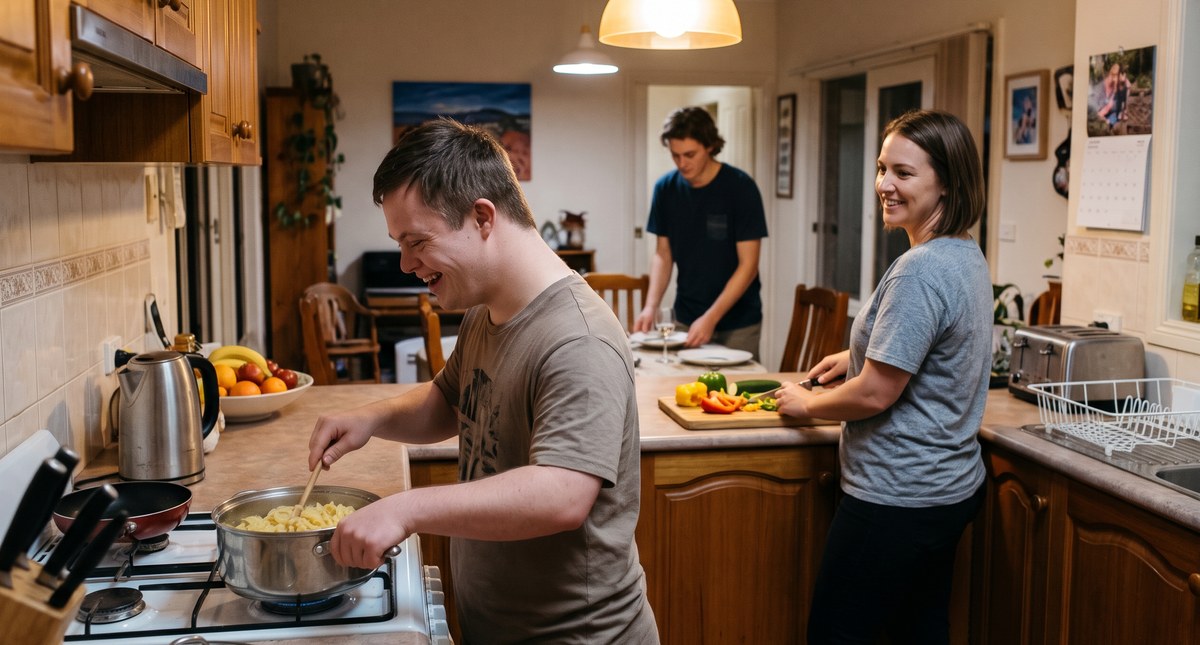
Three people cooking dinner together in a shared home kitchen

SIL does not pay for the house. That is the point most families miss the first time. It also does not cover support outside the home, so if you need help getting to work or to appointments, that is funded separately.

One recent change worth knowing: since 1 October 2026, SIL supports can only be delivered by providers that are registered with the NDIS, or that had applied to register before that date. If you are already receiving SIL, ask your provider where they stand.

SDA pays for the home itself

Specialist disability accommodation funds the dwelling, not the support. It is housing built or modified for people with extreme functional impairment or very high support needs. Think wide doorways, a kitchen bench you can wheel under, ceiling hoists, doors that open with a button.

SDA is assessed separately from your support needs and only a small share of participants qualify. It is also not one thing. The NDIS groups SDA into improved liveability, fully accessible, robust and high physical support, depending on what the home is built to do.

Many people who have SDA also have SIL. The SDA pays for the walls and the fittings. The SIL pays for the people who support you inside them.

ILO is the flexible middle

Individualised living options are for people who want to shape their own arrangement rather than move into a standard shared home. You might live with housemates, or in the home of a host family. You might lean more heavily on family and friends, with funded support filling the gaps.

ILO is usually built in two stages. The first is working out what arrangement would actually suit you and who would be part of it. The second is support to set it up and keep it running. Along the way it can fund personal care, help with household tasks, skill building and support to make decisions.

What it does not fund is the home itself, modifications to your home, or activities outside it such as work, study or sport.

STA is time apart, not a holiday

Short term accommodation, still widely called respite, gives you and the people who usually support you a break from each other. You stay somewhere else, with support, while your family or carer gets time to rest.

The NDIS usually funds up to 28 days a year, in blocks of up to 14 days at a time. Many families use it as one weekend a month rather than a single long stay.

It pays for the accommodation, your personal care, and the support you need to take part in community, cultural or social activities. It does not pay for the activities themselves, and it is not for holidays. No airfares, no cruises, no tours.

Telling them apart

What it pays forWho it suitsWhat it does not cover
SILSupport workers in your home, including overnightPeople who need frequent or 24 hour help at homeThe house, or support outside the home
SDAThe home itself, built for high support needsPeople with extreme functional impairment or very high support needsAny support workers
ILOAn arrangement you design, plus help to set it upPeople who want to live their way, with a mix of funded and unpaid supportThe home, modifications, or activities outside it
STAShort stays with support, so your carer can restPeople whose main support comes from family or a carerHolidays, travel, or the activities themselves

Which one do I actually need?

  • If you need help at home every day, including overnight, start with SIL.
  • If you need a home built for your needs, that is SDA, and it usually comes with SIL as well.
  • If you want to design something of your own, without 24 hour support, ILO is the conversation to have.
  • If the person who cares for you needs a break, that is STA.
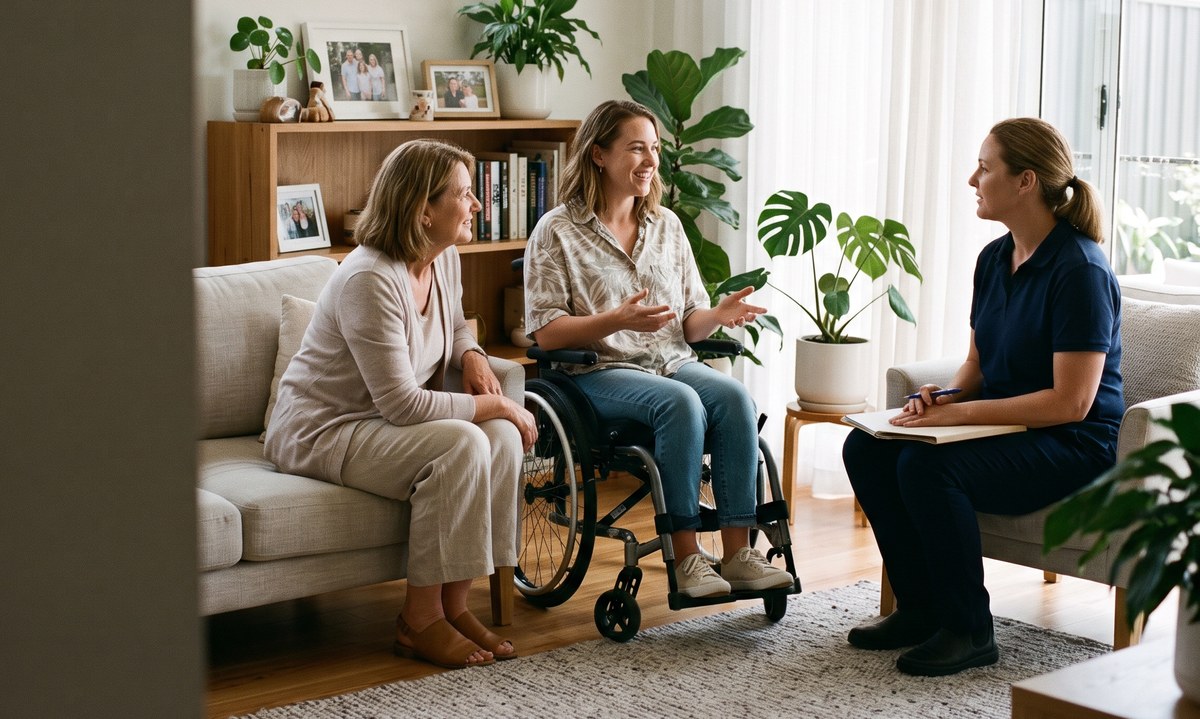
A support coordinator talking with a participant and her mother in their living room

You can have more than one. Plenty of people have SDA and SIL, or SIL and STA.

Three questions worth asking at your next meeting

  1. Which of these does my current plan actually fund, and under which budget?
  2. If I am not eligible for SDA, what else could make my home work better?
  3. What evidence would you need to see before funding a change?

The NDIA is partway through updating plan structures and guidelines under the new legislation, so the wording on your plan may differ from what you read online. Ask your support coordinator or planner to point to the line item.

Where we fit

We deliver supported independent living and in-home support across New South Wales, Victoria and Queensland. We do not build SDA, but we can walk you through how SDA and SIL work together, and what to ask when you inspect a property.

If you are weighing up a move, our current vacancies are listed by state, and we are happy to talk through what support would actually look like day to day before you commit to anything.

Frequently asked questions

Can I have SIL and SDA at the same time?

Yes. They fund different things. SDA pays for the home, SIL pays for the support you receive in it.

Do I have to share my support with other people to get SIL?

Usually yes, because SIL is priced on shared support. If your disability needs mean sharing is not safe or practical, individual support can be considered.

Is short term accommodation the same as a holiday?

No. It is funded so you and your usual carers can have time apart, and it does not cover travel or the cost of activities.

Can I change from ILO to SIL, or the other way around?

Yes, through a plan review, or if your circumstances change. It helps to have evidence about what has and has not worked.

Talk it through with us

If you are not sure which of these your plan is meant to cover, that is a common place to be. Call us on (02) 9157 6900 or send us a message and we will talk through your situation, with no obligation.

Definitions, eligibility language and the short term accommodation limits in this article were checked against ndis.gov.au on 10 November 2026. This is general information, not advice about your individual plan.

Now supporting participants across NSW, Victoria and Queensland · Registered NDIS provider
News

SIL, SDA, ILO and STA: Four Acronyms Families Mix Up

SIL, SDA, ILO and STA: Four Acronyms Families Mix Up

If you have sat in a planning meeting lately, you have probably heard all four of these in the same breath. They sound like variations on one idea. They are not.

SIL, SDA, ILO and STA answer four different questions. Where will you live? Who helps you there? How is that help arranged? And what happens when the person who usually cares for you needs a break?

Get them clear and the rest of your plan gets easier to read. Mix them up and you can spend months asking for the wrong thing.

The short version

  • SIL, supported independent living: the support workers in your home.
  • SDA, specialist disability accommodation: the home itself.
  • ILO, individualised living options: a way to design your own arrangement.
  • STA, short term accommodation: short stays away from your usual care.

SIL is the support, not the house

Supported independent living pays for the people who help you at home. Personal care, cooking, cleaning, getting ready for the day, building skills so you can do more yourself.

It is for people who need a significant amount of help through the day, seven days a week, including overnight. Most SIL is shared, which means a support worker supports you and your housemates across the same shift. If your needs mean you cannot share, individual support can be funded instead, though that is the exception rather than the rule.

Three people cooking dinner together in a shared home kitchen

SIL does not pay for the house. That is the point most families miss the first time. It also does not cover support outside the home, so if you need help getting to work or to appointments, that is funded separately.

One recent change worth knowing: since 1 October 2026, SIL supports can only be delivered by providers that are registered with the NDIS, or that had applied to register before that date. If you are already receiving SIL, ask your provider where they stand.

SDA pays for the home itself

Specialist disability accommodation funds the dwelling, not the support. It is housing built or modified for people with extreme functional impairment or very high support needs. Think wide doorways, a kitchen bench you can wheel under, ceiling hoists, doors that open with a button.

SDA is assessed separately from your support needs and only a small share of participants qualify. It is also not one thing. The NDIS groups SDA into improved liveability, fully accessible, robust and high physical support, depending on what the home is built to do.

Many people who have SDA also have SIL. The SDA pays for the walls and the fittings. The SIL pays for the people who support you inside them.

ILO is the flexible middle

Individualised living options are for people who want to shape their own arrangement rather than move into a standard shared home. You might live with housemates, or in the home of a host family. You might lean more heavily on family and friends, with funded support filling the gaps.

ILO is usually built in two stages. The first is working out what arrangement would actually suit you and who would be part of it. The second is support to set it up and keep it running. Along the way it can fund personal care, help with household tasks, skill building and support to make decisions.

What it does not fund is the home itself, modifications to your home, or activities outside it such as work, study or sport.

STA is time apart, not a holiday

Short term accommodation, still widely called respite, gives you and the people who usually support you a break from each other. You stay somewhere else, with support, while your family or carer gets time to rest.

The NDIS usually funds up to 28 days a year, in blocks of up to 14 days at a time. Many families use it as one weekend a month rather than a single long stay.

It pays for the accommodation, your personal care, and the support you need to take part in community, cultural or social activities. It does not pay for the activities themselves, and it is not for holidays. No airfares, no cruises, no tours.

Telling them apart

What it pays forWho it suitsWhat it does not cover
SILSupport workers in your home, including overnightPeople who need frequent or 24 hour help at homeThe house, or support outside the home
SDAThe home itself, built for high support needsPeople with extreme functional impairment or very high support needsAny support workers
ILOAn arrangement you design, plus help to set it upPeople who want to live their way, with a mix of funded and unpaid supportThe home, modifications, or activities outside it
STAShort stays with support, so your carer can restPeople whose main support comes from family or a carerHolidays, travel, or the activities themselves

Which one do I actually need?

  • If you need help at home every day, including overnight, start with SIL.
  • If you need a home built for your needs, that is SDA, and it usually comes with SIL as well.
  • If you want to design something of your own, without 24 hour support, ILO is the conversation to have.
  • If the person who cares for you needs a break, that is STA.

A support coordinator talking with a participant and her mother in their living room

You can have more than one. Plenty of people have SDA and SIL, or SIL and STA.

Three questions worth asking at your next meeting

  1. Which of these does my current plan actually fund, and under which budget?
  2. If I am not eligible for SDA, what else could make my home work better?
  3. What evidence would you need to see before funding a change?

The NDIA is partway through updating plan structures and guidelines under the new legislation, so the wording on your plan may differ from what you read online. Ask your support coordinator or planner to point to the line item.

Where we fit

We deliver supported independent living and in-home support across New South Wales, Victoria and Queensland. We do not build SDA, but we can walk you through how SDA and SIL work together, and what to ask when you inspect a property.

If you are weighing up a move, our current vacancies are listed by state, and we are happy to talk through what support would actually look like day to day before you commit to anything.

Frequently asked questions

Can I have SIL and SDA at the same time?

Yes. They fund different things. SDA pays for the home, SIL pays for the support you receive in it.

Do I have to share my support with other people to get SIL?

Usually yes, because SIL is priced on shared support. If your disability needs mean sharing is not safe or practical, individual support can be considered.

Is short term accommodation the same as a holiday?

No. It is funded so you and your usual carers can have time apart, and it does not cover travel or the cost of activities.

Can I change from ILO to SIL, or the other way around?

Yes, through a plan review, or if your circumstances change. It helps to have evidence about what has and has not worked.

Talk it through with us

If you are not sure which of these your plan is meant to cover, that is a common place to be. Call us on (02) 9157 6900 or send us a message and we will talk through your situation, with no obligation.

Definitions, eligibility language and the short term accommodation limits in this article were checked against ndis.gov.au on 10 November 2026. This is general information, not advice about your individual plan.

Ready to talk about support? Enquire now
FlexiHome Care blog redesign - END ============ -->