
Finishing school is a huge milestone, and for many families the next question comes quickly: what happens now? For young people with disability, moving from school into work can feel uncertain, especially when the usual pathways do not seem to fit.

School Leaver Employment Supports, or SLES, exists for exactly this moment. It is an NDIS funded program that walks alongside young people with disability who are finishing school and wondering what comes next. Instead of being handed a job application and wished good luck, participants build their skills step by step, try real work in a supported setting, and move toward employment at their own pace.

At FlexiHome Care, we have designed our SLES program to give you the time, tools and support to build the skills employers look for. Here is what you can expect.
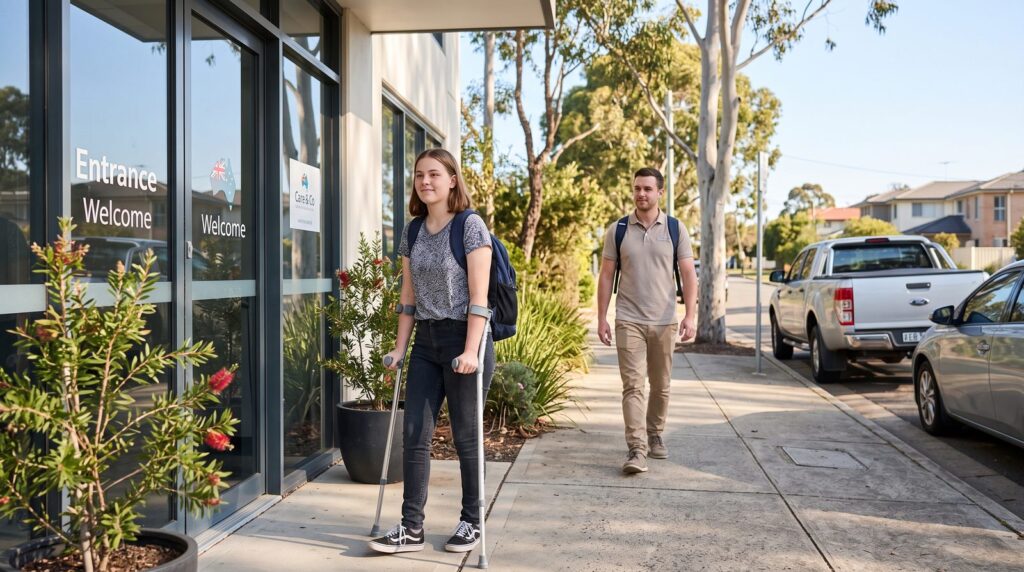
A young person with disability arriving at work with their support worker.

What is SLES?

School Leaver Employment Supports is an NDIS program focused on the step from school into work. It builds everyday skills like communication, travel and organisation alongside job skills like resumes, interviews and workplace safety, with real work experience woven through. It is funded through your NDIS plan under Finding and Keeping a Job, and it is built around your goals, not a one size fits all timetable.

The program at a glance

  • Who it is for: young people with disability in their final years of school or who have recently finished
  • Funding: through your NDIS plan, under Finding and Keeping a Job
  • How it runs: small group workshops, one to one coaching and practical activities, usually around 15 to 20 hours per week
  • How long: a structured 12 month journey, paced around you
  • Where it leads: skills, confidence and real work experience on the path to employment
  • Your team: a coach who stays with you from your first lesson through to your first shift

Stage by stage: what the year looks like

Every participant’s journey looks a little different, but the program follows a clear pathway across four stages.

Stage 1: Starting with your strengths. You begin with a vocational profile that maps your strengths, interests and goals to realistic employment pathways. From there you build the foundation skills every workplace expects:

  • communication and teamwork, including active listening, following instructions and asking for help
  • understanding your rights and responsibilities as an employee
  • personal organisation, from time management to routines and punctuality
  • looking after yourself at work, including managing stress and energy

Stage 2: Building your job toolkit. This stage is about the practical tools you will use for years to come:

  • your first professional resume and cover letter, built piece by piece (including turning school, sport and home responsibilities into real experience on paper)
  • digital skills for work: a professional email address, email etiquette and staying safe online
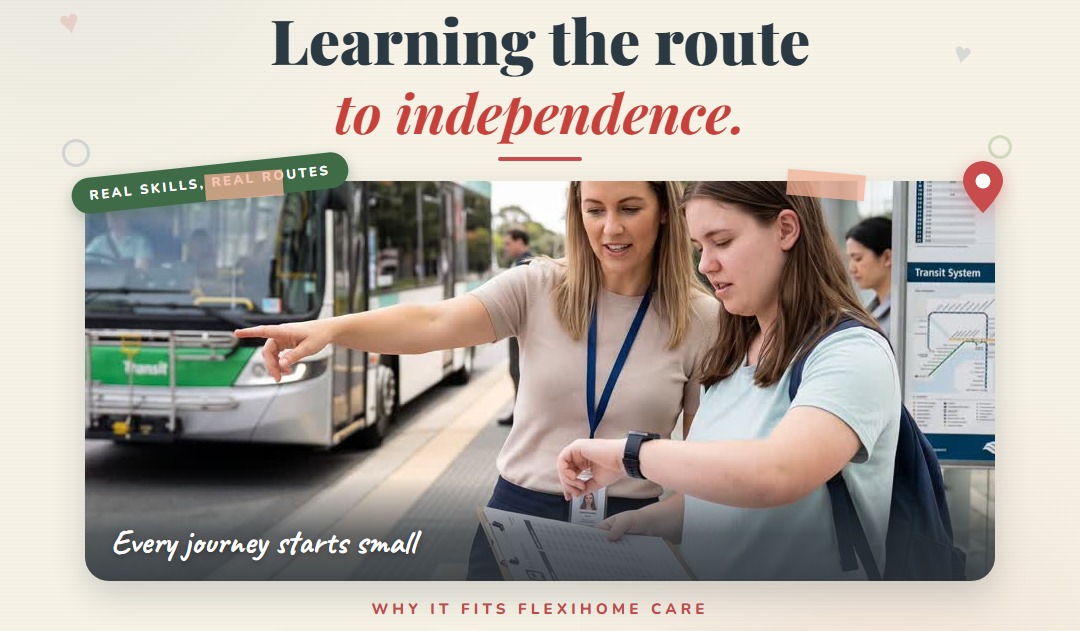
  • travel training so you can plan routes, read timetables, use travel apps, manage your fares and handle delays calmly
  • money basics for work: budgeting for transport and lunches, and understanding payslips, tax file numbers and superannuation
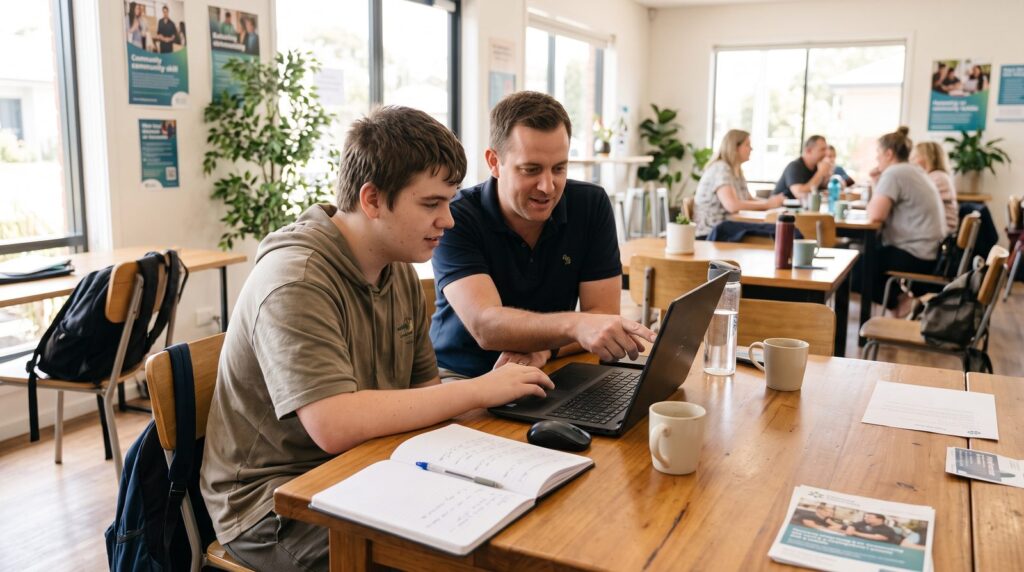
A young person building their resume on a laptop with a job coach beside them.

Stage 3: Practising for the real thing. This is where skills meet real workplaces:

  • interview practice with mock interviews and honest, encouraging feedback
  • workplace health and safety: spotting hazards, safety signs, correct lifting and protective equipment
  • supported work experience with a local employer, in an area that suits you
  • a job coach beside you on the ground, helping with task lists and building independence day by day
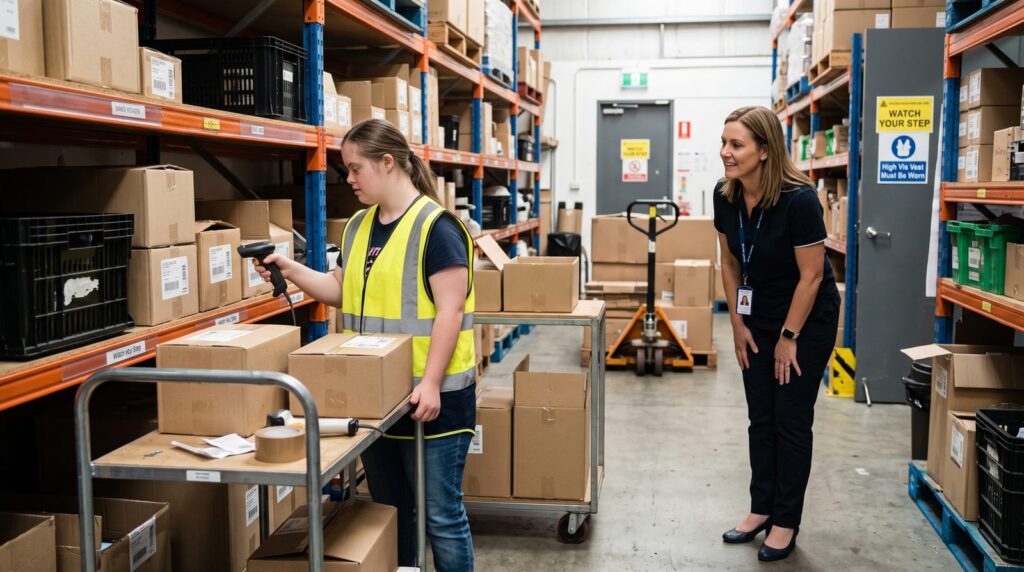
A young person with disability on a supported work trial with their job coach.

Stage 4: Moving into work. The final stage brings it all together:

  • real job applications, with coaching through search sites and entry level roles
  • cover letters tailored to the jobs you actually want
  • an employment portfolio: your resume, certificates, references and work trial feedback, all in one place
  • transition planning, including connecting with ongoing supports where that is the right fit
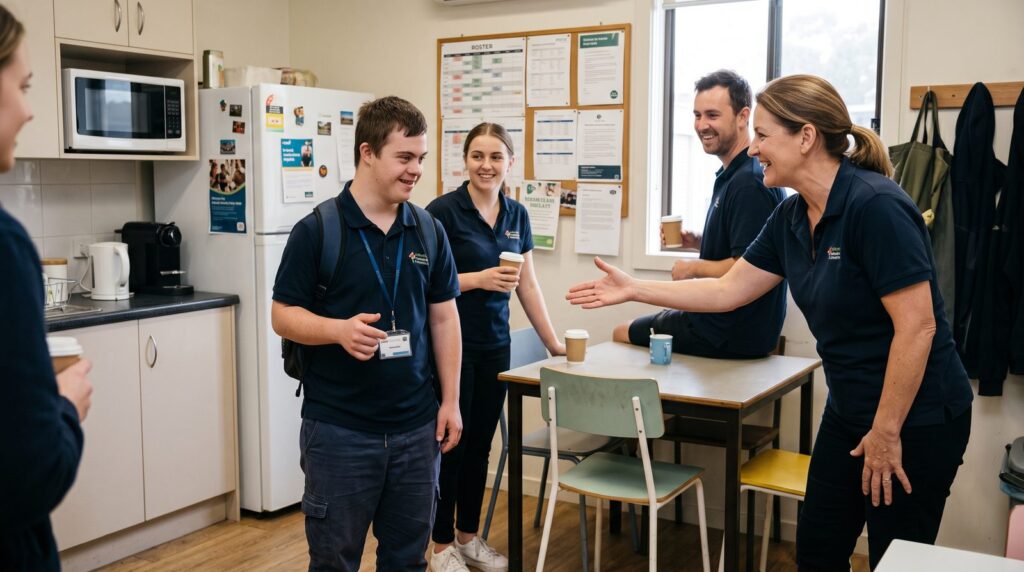
A young person with disability being welcomed into their first job.

By the time you finish, you will have: a professional resume you built yourself, interview experience with real feedback, the confidence to travel to work independently, a work trial under your belt, a portfolio of references and certificates, and a clear plan for what comes next.

How the support works

Across the program you learn in small group workshops, one to one coaching and hands on activities, usually around 15 to 20 hours per week of structured support. Your progress is tracked with regular reports, so you, your family and your support network can see how far you have come. Throughout your journey there is a coach who knows your goals and adjusts the support around you. From your first lesson through to real work experience, you will never be doing it alone.

Who SLES is for

SLES is designed for young people with disability who are in their final years of school or have recently finished, and who have employment supports in their NDIS plan. You do not need to know what job you want yet, and you do not need to feel ready. That is what the program is for. Families and support coordinators are welcome to reach out on behalf of a young person too.

Common questions

Can I start while I am still at school?

Yes. You can start in your final years of school or after you have finished. If you have finished school and you are not sure what comes next, that is a great time to begin.

How long does the program go for?

Our program is built around a structured 12 month journey. Your coach adjusts the pace to suit you, so the focus stays on progress, not pressure.

Do I need to be ready for a job on day one?

Not at all. The program starts with what you enjoy and what you are good at, and builds from there. The confidence comes with the practice.

How is it funded?

SLES is funded through your NDIS plan under Finding and Keeping a Job. If you are unsure whether your plan includes employment supports, our team can help you check, and your support coordinator or local area coordinator can point you in the right direction.

What happens after the program?

Your next step is planned with you before you finish, whether that is a job, further training, or ongoing support such as Disability Employment Services. You leave with a portfolio and a plan.

How to get started

Fill in our quick Expression of Interest and our team will be in touch: forms.gle/Vw5vouEQbSG3PmzS8

We will have a friendly chat about your goals, your plan and whether SLES is the right fit. Our team is based in Bella Vista, in Sydney’s Hills District.

You can also reach us any time:

  • Call (02) 9157 6900
  • Email enquiries@flexihomecare.org
  • Visit www.flexihomecare.org

You bring the goals. We bring the support. Together, we will get you ready.
Now supporting participants across NSW, Victoria and Queensland · Registered NDIS provider
News

What Happens After School? School Leaver Employment Supports (SLES) at FlexiHome Care

What Happens After School? School Leaver Employment Supports (SLES) at FlexiHome Care

Finishing school is a huge milestone, and for many families the next question comes quickly: what happens now? For young people with disability, moving from school into work can feel uncertain, especially when the usual pathways do not seem to fit.

School Leaver Employment Supports, or SLES, exists for exactly this moment. It is an NDIS funded program that walks alongside young people with disability who are finishing school and wondering what comes next. Instead of being handed a job application and wished good luck, participants build their skills step by step, try real work in a supported setting, and move toward employment at their own pace.

At FlexiHome Care, we have designed our SLES program to give you the time, tools and support to build the skills employers look for. Here is what you can expect.

A young person with disability arriving at work with their support worker.

What is SLES?

School Leaver Employment Supports is an NDIS program focused on the step from school into work. It builds everyday skills like communication, travel and organisation alongside job skills like resumes, interviews and workplace safety, with real work experience woven through. It is funded through your NDIS plan under Finding and Keeping a Job, and it is built around your goals, not a one size fits all timetable.

The program at a glance

  • Who it is for: young people with disability in their final years of school or who have recently finished
  • Funding: through your NDIS plan, under Finding and Keeping a Job
  • How it runs: small group workshops, one to one coaching and practical activities, usually around 15 to 20 hours per week
  • How long: a structured 12 month journey, paced around you
  • Where it leads: skills, confidence and real work experience on the path to employment
  • Your team: a coach who stays with you from your first lesson through to your first shift

Stage by stage: what the year looks like

Every participant’s journey looks a little different, but the program follows a clear pathway across four stages.

Stage 1: Starting with your strengths. You begin with a vocational profile that maps your strengths, interests and goals to realistic employment pathways. From there you build the foundation skills every workplace expects:

  • communication and teamwork, including active listening, following instructions and asking for help
  • understanding your rights and responsibilities as an employee
  • personal organisation, from time management to routines and punctuality
  • looking after yourself at work, including managing stress and energy

Stage 2: Building your job toolkit. This stage is about the practical tools you will use for years to come:

  • your first professional resume and cover letter, built piece by piece (including turning school, sport and home responsibilities into real experience on paper)
  • digital skills for work: a professional email address, email etiquette and staying safe online
  • travel training so you can plan routes, read timetables, use travel apps, manage your fares and handle delays calmly
  • money basics for work: budgeting for transport and lunches, and understanding payslips, tax file numbers and superannuation
A young person building their resume on a laptop with a job coach beside them.

Stage 3: Practising for the real thing. This is where skills meet real workplaces:

  • interview practice with mock interviews and honest, encouraging feedback
  • workplace health and safety: spotting hazards, safety signs, correct lifting and protective equipment
  • supported work experience with a local employer, in an area that suits you
  • a job coach beside you on the ground, helping with task lists and building independence day by day
A young person with disability on a supported work trial with their job coach.

Stage 4: Moving into work. The final stage brings it all together:

  • real job applications, with coaching through search sites and entry level roles
  • cover letters tailored to the jobs you actually want
  • an employment portfolio: your resume, certificates, references and work trial feedback, all in one place
  • transition planning, including connecting with ongoing supports where that is the right fit
A young person with disability being welcomed into their first job.

By the time you finish, you will have: a professional resume you built yourself, interview experience with real feedback, the confidence to travel to work independently, a work trial under your belt, a portfolio of references and certificates, and a clear plan for what comes next.

How the support works

Across the program you learn in small group workshops, one to one coaching and hands on activities, usually around 15 to 20 hours per week of structured support. Your progress is tracked with regular reports, so you, your family and your support network can see how far you have come. Throughout your journey there is a coach who knows your goals and adjusts the support around you. From your first lesson through to real work experience, you will never be doing it alone.

Who SLES is for

SLES is designed for young people with disability who are in their final years of school or have recently finished, and who have employment supports in their NDIS plan. You do not need to know what job you want yet, and you do not need to feel ready. That is what the program is for. Families and support coordinators are welcome to reach out on behalf of a young person too.

Common questions

Can I start while I am still at school?

Yes. You can start in your final years of school or after you have finished. If you have finished school and you are not sure what comes next, that is a great time to begin.

How long does the program go for?

Our program is built around a structured 12 month journey. Your coach adjusts the pace to suit you, so the focus stays on progress, not pressure.

Do I need to be ready for a job on day one?

Not at all. The program starts with what you enjoy and what you are good at, and builds from there. The confidence comes with the practice.

How is it funded?

SLES is funded through your NDIS plan under Finding and Keeping a Job. If you are unsure whether your plan includes employment supports, our team can help you check, and your support coordinator or local area coordinator can point you in the right direction.

What happens after the program?

Your next step is planned with you before you finish, whether that is a job, further training, or ongoing support such as Disability Employment Services. You leave with a portfolio and a plan.

How to get started

Fill in our quick Expression of Interest and our team will be in touch: forms.gle/Vw5vouEQbSG3PmzS8

We will have a friendly chat about your goals, your plan and whether SLES is the right fit. Our team is based in Bella Vista, in Sydney’s Hills District.

You can also reach us any time:

  • Call (02) 9157 6900
  • Email enquiries@flexihomecare.org
  • Visit www.flexihomecare.org

You bring the goals. We bring the support. Together, we will get you ready.
Ready to talk about support? Enquire now
FlexiHome Care blog redesign - END ============ -->